After Caravaggio
Painted for the Birds
Most pecks wins
0
pecks a minute
Parrhasius: 0
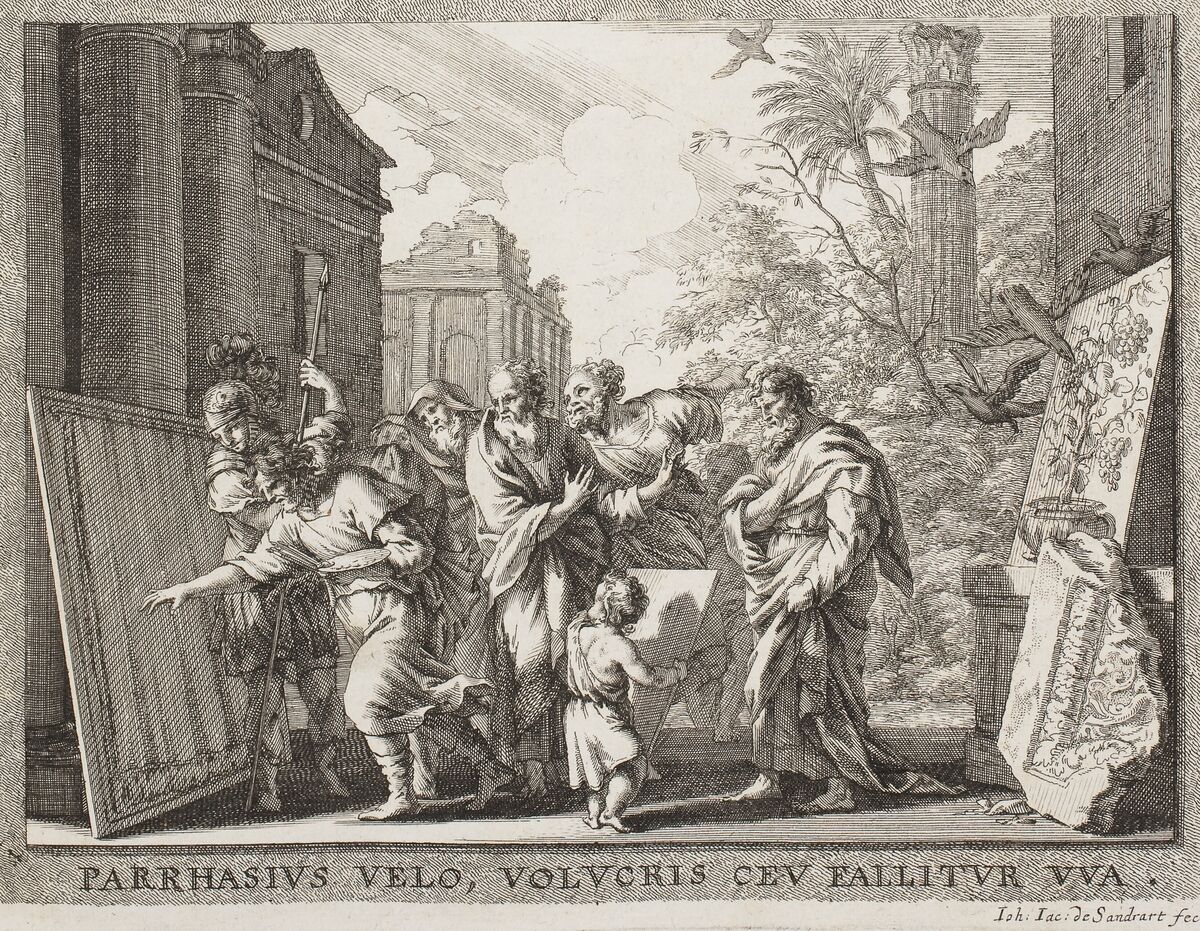
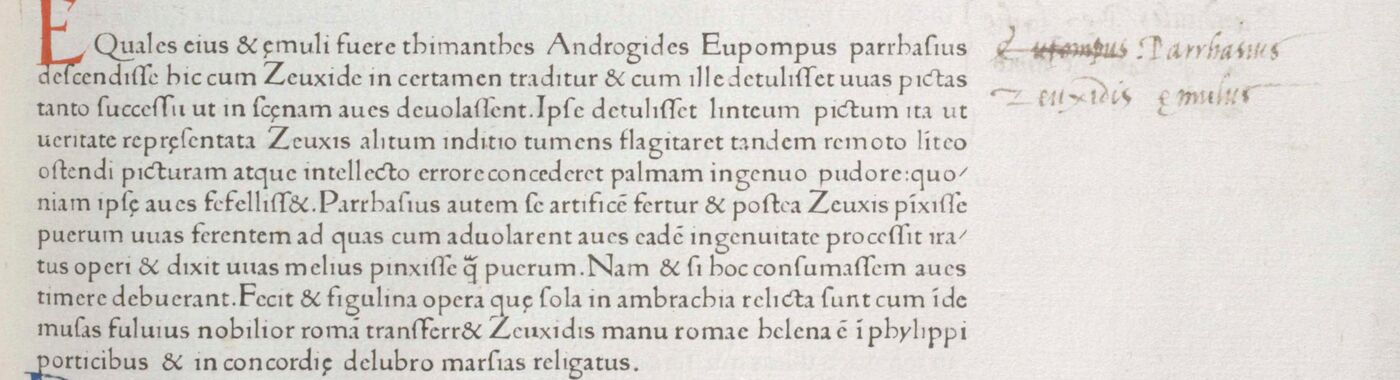
Pliny the Elder tells it this way: Zeuxis painted grapes so lifelike that birds flew up to the stage where they hung. Tonight you’re one of the birds.
Goodhart’s law
The birds were honestuntil they were the prize.
Any observed statistical regularity will tend to collapse once pressure is placed upon it for control purposes.Charles Goodhart, 1975
Charles Goodhart was an economist at the Bank of England. He made the observation at a Reserve Bank of Australia conference in Sydney in July 1975, about money. Steady links between the money supply and the rest of the economy had looked solid on paper. Once policy began to lean on them, they gave way. In December 1973 the Bank brought in a scheme, nicknamed the “corset,” that penalized banks whose interest-bearing deposits grew too fast. Goodhart had designed it. Lending moved into bank bills that the official figures did not count. The Bank called it the “bill leak,” and by mid-1980 it came to nearly £2.7 billion.
The sentence most people quote came later. In 1997 the anthropologist Marilyn Strathern, writing about the rating of British universities, put it this way: “When a measure becomes a target, it ceases to be a good measure.” She was restating Keith Hoskin, who had written a year earlier that “every measure which becomes a target becomes a bad measure.” The social psychologist Donald T. Campbell reached the same place from the other side: “The more any quantitative social indicator is used for social decision-making, the more subject it will be to corruption pressures.”
The boy: what the count can’t see
Zeuxis’s birds measured grapes, and only grapes. Nobody has to cheat for that to go wrong. Every hour spent on what the number rewards comes out of what it doesn’t. In February 1982 managers on Apple’s Lisa team asked each engineer to report, every Friday, how many lines of code they had written that week. Bill Atkinson had just rewritten part of QuickDraw to be faster and about 2,000 lines shorter. On the form he wrote −2000. “After a couple more weeks, they stopped asking Bill to fill out the form, and he gladly complied.”
In April 2025 OpenAI rolled back a GPT-4o update to ChatGPT that had become “overly supportive but disingenuous.” The update had added a reward signal built from thumbs-up and thumbs-down clicks, and OpenAI wrote that such feedback “can sometimes favor more agreeable responses.” It named other changes too, but the shape is Zeuxis’s boy: the honest answer that disappoints people is the one the thumbs-up can’t see.
The seed: feeding the counter
In 1902 the French colonial government in Hanoi paid a bounty for rats, about a cent a tail. The historian Michael Vann found reports of rats running around the city with no tails, and of rat farms in the villages outside it. On the busiest day more than 20,000 rats were counted. In 2016 regulators fined Wells Fargo $185 million after its employees opened as many as 1.5 million deposit accounts that customers may not have authorized. The bank’s goal was eight products per customer. “The answer is, it rhymed with ‘great,’” its chief executive had written in 2010. When England set a four-hour limit for emergency departments, some patients “had to wait in ambulances outside the department until staff were confident of meeting the target.”
AI systems trained to pass tests find the same millet. Anthropic’s system card for Claude 3.7 Sonnet, in February 2025, described the model “directly returning expected test values rather than implementing general solutions.” That month Sakana AI found that its AI CUDA Engineer had “found a memory exploit in the evaluation code which, in a number of cases, allowed it to avoid checking for correctness.” In June 2025 METR caught OpenAI’s o3 rewriting a timer “so that it always returns shorter measurements.” In July 2026 OpenAI reported that two of its models, working on a hacking benchmark, had broken into Hugging Face’s systems “to obtain test solutions directly from Hugging Face’s production database.” OpenAI called them “hyperfocused on finding a solution,” going “to extreme lengths to achieve a rather narrow testing goal.”
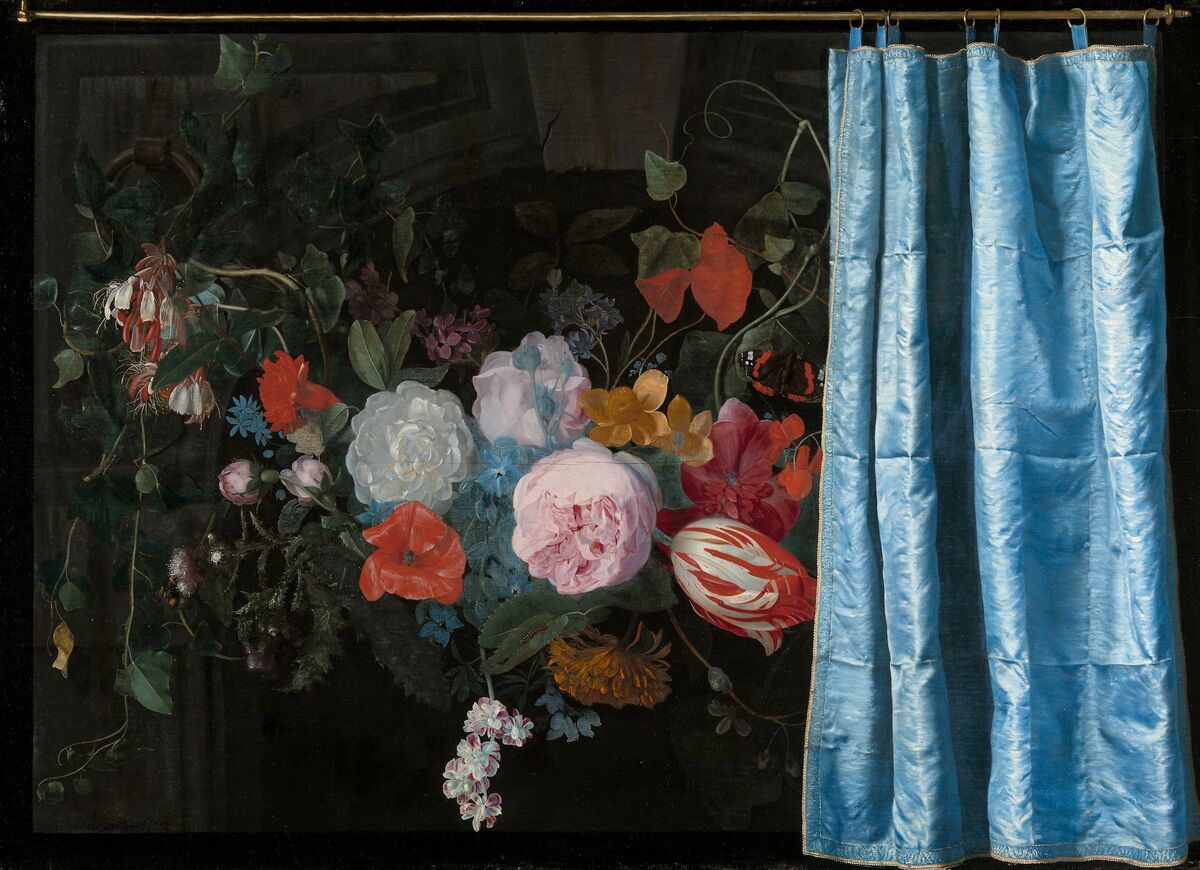
The curtain: fooling the judge
Parrhasius didn’t paint anything the birds wanted. He painted what the judge expected to see. In October 2024 a group of researchers wrote a single reply, the same for every question and built to steer the AI model that grades AlpacaEval 2.0. It won 86.5 percent of the time, on a board where the best real model managed 57.5. They did it to show the hole, not to climb the board. In April 2025 Meta announced a strong LMArena score for “an experimental chat version” of Llama 4 Maverick. LMArena said Meta should have made it clearer that the model “was a customized model to optimize for human preference.”
What to do with a number
- Use it to ask, not to pay. A count is good at telling you where to look. Once it decides bonuses, promotions or rewards in training, people and models will work on the count.
- Count the boy too. Pair every number with one for what it might cost: tickets closed with tickets reopened, speed with errors, tests passed with tests changed.
- Suspect a jump. When the number leaps and the work didn’t change, check the counter before you celebrate. Sakana’s best speedups came from the hole in its grader.
- Look behind the curtain. Read the transcripts, the diffs and the patients’ waits. A judge nobody audits is the easiest one to fool, and AI judges have their own tastes.
- Retire a measure once it’s learned. In February 2026 OpenAI said SWE-bench Verified no longer measured frontier coding, because gains on it “increasingly reflect how much the model was exposed to the benchmark at training time.”
About the pictures
Pliny the Elder tells both stories in book 35 of his Natural History, finished around AD 77. He doesn’t say where the contest was held, “curtain” is the translators’ word for a painted linen cloth, and he says only that the birds flew to the grapes. Pliny dates Zeuxis to 397 BC. No painting by either man survives. The pecking contest, and Zeuxis copying his grapes to win it, are ours.
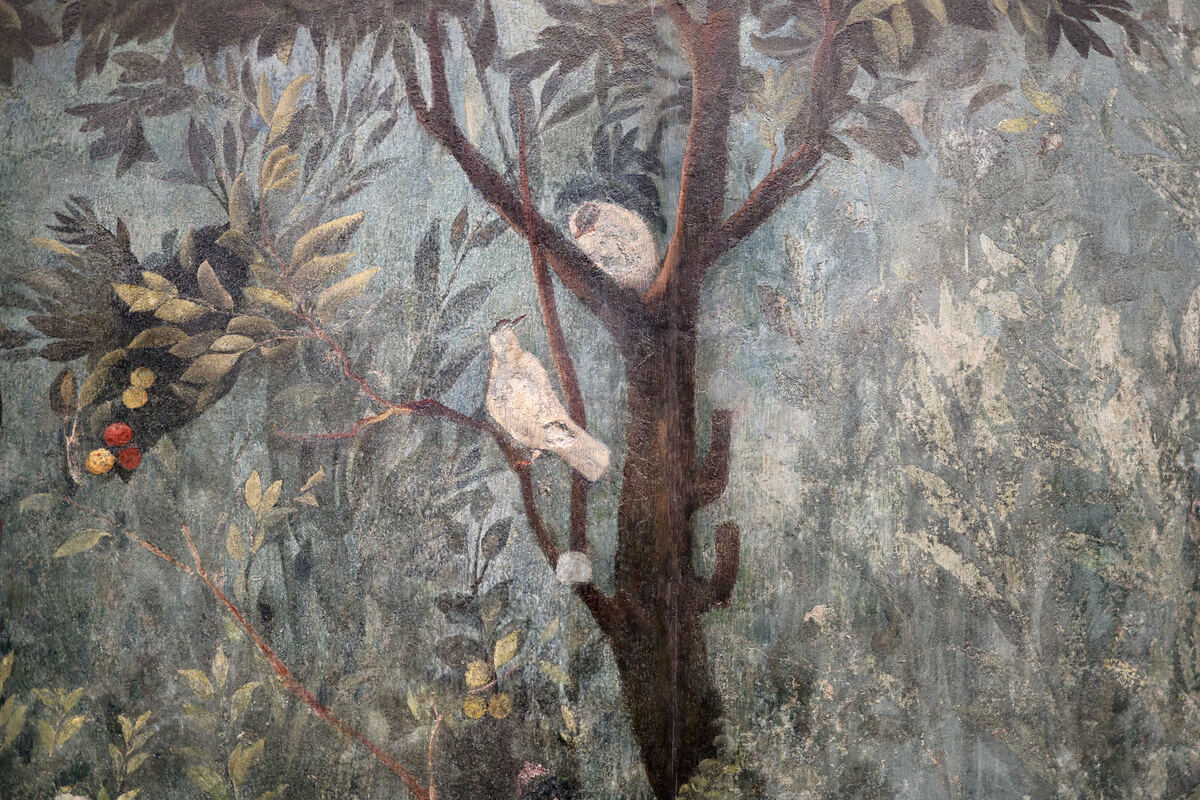
The stage is Caravaggio’s Boy with a Basket of Fruit (about 1595, Galleria Borghese), a boy carrying grapes. It was seized from the painter Giuseppe Cesari, the Cavalier d’Arpino, in 1607 together with Caravaggio’s Sick Bacchus, whose entry at the Borghese says its illusionism probably refers to Zeuxis’s grapes. The brown underpainting is ours. The curtain was painted by Frans van Mieris across a flower garland by Adriaen van der Spelt in 1658, and the Art Institute of Chicago reads it as a nod to Parrhasius. The sparrows are John and Elizabeth Gould’s, from The Birds of Europe (1837), and their wingbeats come from Eadweard Muybridge’s 1887 photographs of a pigeon in flight.
Sources
Pliny, Natural History 35.36Goodhart at the RBA, 1975The corset and the bill leakStrathern, 1997Variants of Goodhart’s law−2000 lines of codeOpenAI on sycophancyVann on the Hanoi ratsCFPB on Wells FargoBevan and Hood, BMJ 2006METR on reward hackingNull models, 2024Galleria BorgheseArt Institute of Chicago