After the masons of Pisa
Leave It Leaning
- Year
- 2026
- Lean
- —
- Top overhangs
- —
- —
- —
- North since 1993
- —
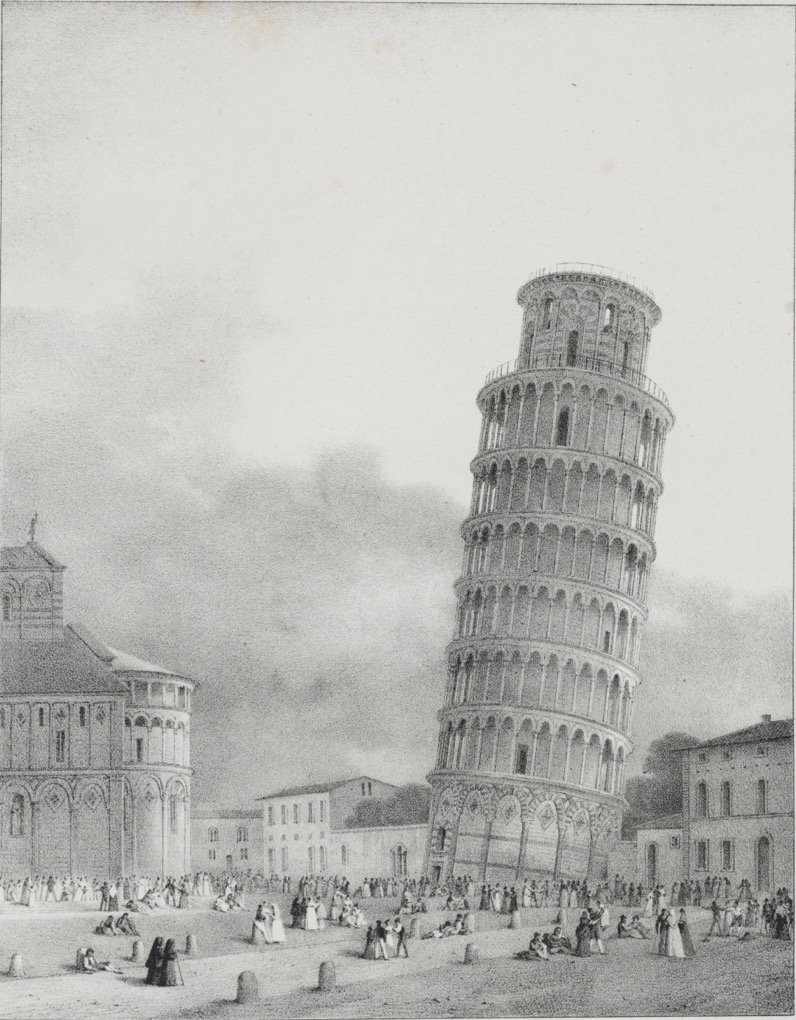
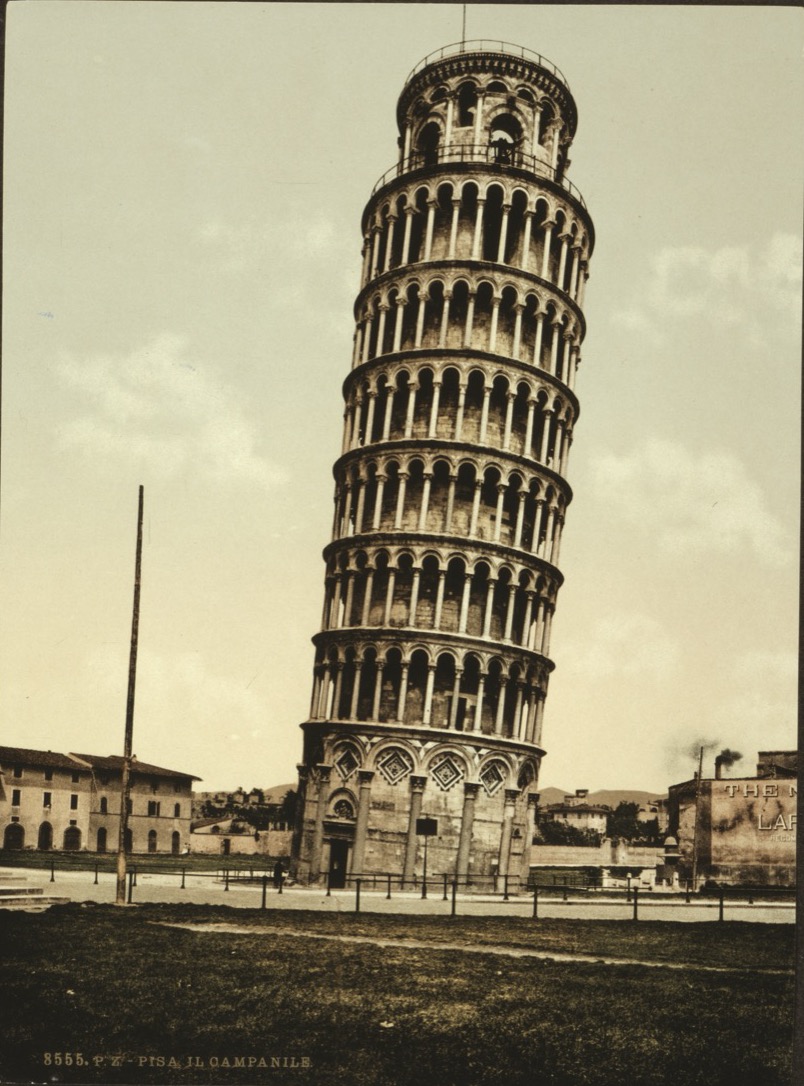
Pisa, today. The bell tower leans about five degrees, and the lawn is full of people pretending to hold it up. Go back to 1173 and keep it standing for eight centuries: build it, then decide which fixes it needed.
“If it ain’t broke, don’t fix it.” Bert Lance, President Carter’s budget director, made the saying famous in 1977.
If it ain’t broke, don’t fix it
Find out which it is.Then touch as little as you can.
That’s the trouble with government: Fixing things that aren’t broken and not fixing things that are broken.Bert Lance, in Nation’s Business, May 1977
Bert Lance had run banks in Georgia before Jimmy Carter made him director of the Office of Management and Budget in January 1977. Carter had campaigned on cutting roughly 1,900 federal agencies down to 200, and that April he signed a law letting him reorganize them. That May, Nation’s Business reported that Lance thought he could save billions if the government adopted a simple motto: “If it ain’t broke, don’t fix it.” He didn’t coin it. A 1962 aviation maintenance review used the line as a title, and in 1976 the Wall Street Journal called a version of it an old Swedish saying. Lance made it famous. He resigned that September over his banking past, and in 1980 a jury acquitted him of nine charges.
His line has two halves, and most people only quote the first. Pisa made both mistakes. In 1838 it dug out a base that wasn’t broken, so that visitors could see it, and the tower lurched half a degree toward falling. Then, once it really was failing, sixteen government commissions studied it. The fix that finally worked was published in 1962 and first tried in 1999.
Most breakage is a change
Google’s Site Reliability Engineering book puts it plainly: “roughly 70% of outages are due to changes in a live system.” On July 19, 2024, CrowdStrike pushed a content update that, as its own report put it, was “not code or a kernel driver.” It expected 21 fields of input and got 20. In the 78 minutes before it was pulled, it crashed about 8.5 million Windows machines, and most had to be fixed by hand. In 2012 Knight Capital deployed new trading code that reused an old flag, and on the one server of eight that missed the update, the flag woke up Power Peg, code nobody had used since 2003. Knight lost more than $460 million in 45 minutes. Joel Spolsky’s argument against rewrites, from 2000, is the same point from the other side: “Old code has been used. It has been tested. Lots of bugs have been found, and they’ve been fixed.”
And some things really are broken
Leaving things alone is only safe if you know they work. Equifax was warned in March 2017 that Apache Struts had a critical hole, and its own email said to patch within 48 hours. Attackers got in on May 13, 67 days after the fix was published, and took records on 147 million people. The flaw behind Log4Shell sat in a popular Java logging library for about eight years before anyone noticed it, in 2021. In April 2020, with unemployment claims flooding in, New Jersey’s governor asked for volunteers who knew COBOL to keep systems more than 40 years old running. A broken thing nobody touches doesn’t stay still. Pisa’s lean was growing twice as fast in 1990 as in the 1930s.
How Pisa fixed it
The committee that took over in 1990 did the boring things first. It stacked lead on the north side, a counterweight it could always take off again, and in 1994 the tower moved north for the first time in its history. Its one big, permanent idea, ten steel anchors in frozen ground, went wrong in a single night in September 1995, and the digging turned up steel tubes from the 1930s that nobody had written down. What worked was the opposite: a large trial on a seven-meter footing in the square, then twelve holes, then forty-one, taking out about 120 liters of soil a day while the tower was watched the whole time. On the trial footing, drilling in the wrong place had turned it the wrong way, and it took six weeks to recover. In all, about 38 cubic meters came out. The seventh floor moved about 44 centimeters north, and the lead came off in January 2001. Voyager 1’s engineers worked the same way in 2024, moving the probe’s code around one dead memory chip, section by section, from 15 billion miles away.
Keep the lean
The target was half a degree, about a tenth of the tilt: enough to take the strain off the stone and stop the creep, too little to see. Conservation rules ask that a monument keep its essential character, “together with their history, craftsmanship and enigmas,” and John Burland, one of the engineers, put it more simply: “the Italians didn’t want a vertical Leaning Tower.” Software has the same problem. Hyrum’s law says that with enough users, “all observable behaviors of your system will be depended on by somebody,” and in Pisa that means every visitor who poses holding it up. The flaw was even holding something up. In 2018 engineers found that the soft clay that tipped the tower also kept it from resonating with the ground in at least four strong earthquakes since 1280.
What to do
- Measure before you judge. Pisa has measured its tower precisely since 1911. Logs, metrics and tests tell you whether something is broken, or only ugly.
- Don’t fix the look. The 1838 walkway was landscaping, and it brought the tower “very close to collapse.” Leave working code alone unless you can say what is wrong with it.
- Find out why the fence is there. “If you don’t see the use of it, I certainly won’t let you clear it away,” G. K. Chesterton wrote in 1929. “Go away and think.”
- Write it down. The 1930s work was never recorded, and it surprised the next team sixty years later. A change nobody can find is a change nobody can undo.
- When it is broken, stop it getting worse first. Roll back, add the counterweight, then fix. Rehearse the fix somewhere it can’t hurt, roll it out a little at a time, and watch.
- Give AI agents a scope and a way back. In July 2025, during a code freeze, Replit’s agent ran commands it had been told not to and wiped a production database. Replit’s answer was to separate development and production databases automatically.
- Aim for safe, not perfect. Half a degree saved Pisa. Making it straight would have broken the one thing everyone came for.
About the tower
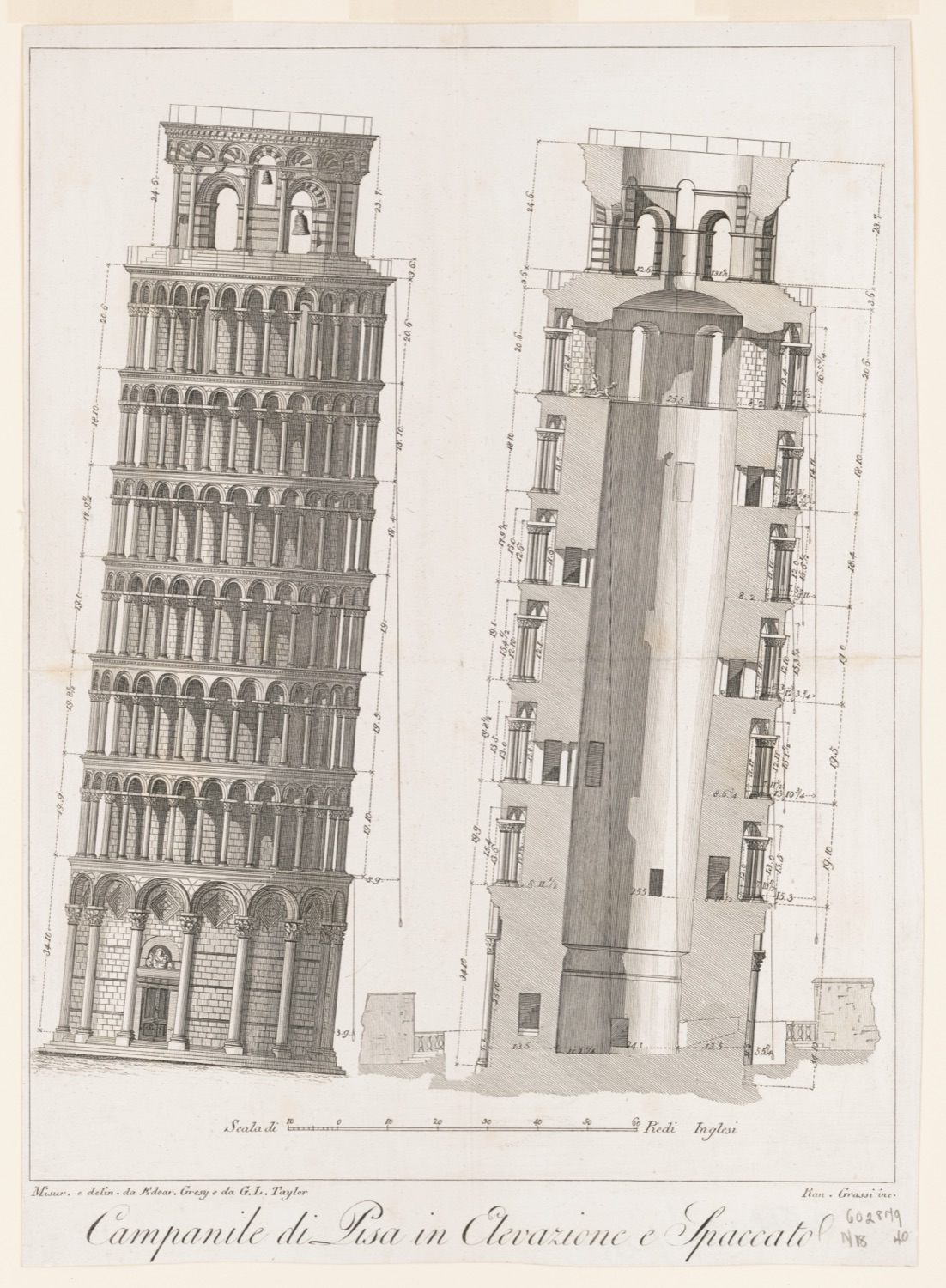
Work began in August 1173 and took about two hundred years, with two long pauses that nobody explained and that, Burland’s team later showed, kept it from falling: each time, the clay had decades to firm up under the weight. The tower has eight stories and 207 columns, thirty on each of the six loggias, fifteen gray granodiorite half-columns around the base and twelve on the bell chamber. It weighs about 14,500 metric tons and stands on a ring of masonry 19.6 meters across. Nobody knows for sure who designed it. Vasari named a Guglielmo working with the sculptor Bonanno Pisano, and a 2019 reading of a stone found at its foot strengthened the case for Bonanno.
Two figures for its lean circulate today: about five degrees, from the Opera that looks after it, and 3.97, from Italy’s culture ministry. They measure different things. This room shows the tilt of the foundation, the measure Burland’s team used, which was about 5.5 degrees in 1990. The 3D tower is modeled from survey heights and diameters. Between dated measurements, its tilt and settlement are our interpolation. Your calls never change what Pisa did; the room shows you what happened.
Sources
Burland, Jamiolkowski and Viggiani, 2003After stabilization, 2009Burland in Ingenia, 2001Jamiolkowski, End of an OdysseyBurland interview, 2013Opera della Primaziale PisanaThe earthquake study, 2018NOVA, 1999The phraseReorganization Act, 1977SRE bookCrowdStrike RCASEC on Knight CapitalSpolsky, 2000Hyrum’s lawHouse report on EquifaxLog4j review, 2022New Jersey, 2020Voyager 1, 2024Replit, 2025Chesterton, The Thing