An engineering gallery. Please touch the exhibits.
Le Petit RasoirSupplément illustré
Who took the Mona Lisa?
Tuesday, August 22, 1911Five centimes
Move the lamp
Chapter I · The Salon Carré
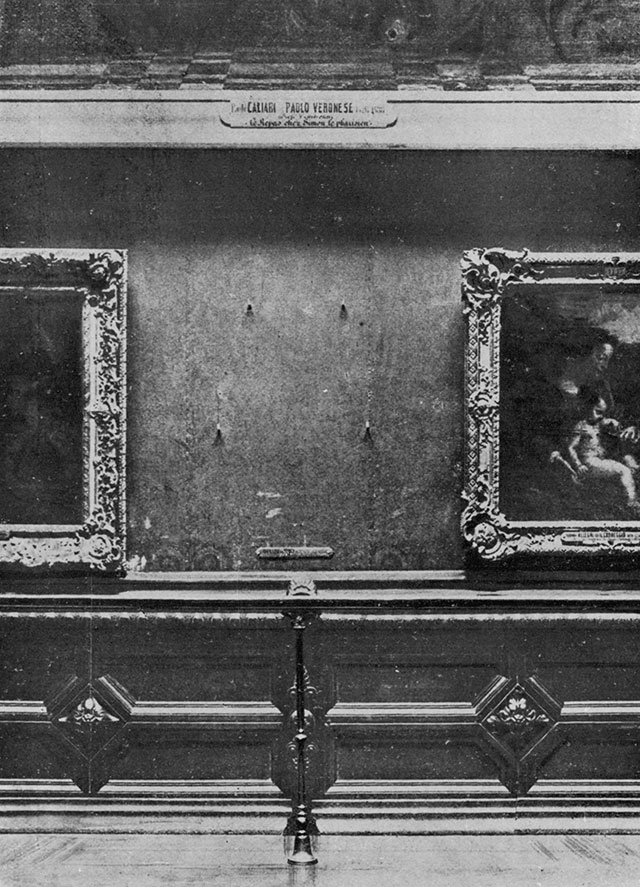
Four iron pegs
Tuesday morning, August 22, 1911. The painter Louis Béroud arrives to paint the Salon Carré and asks the guards a simple question: where is the Mona Lisa?
Search the wall with the lamp and find where she hung.
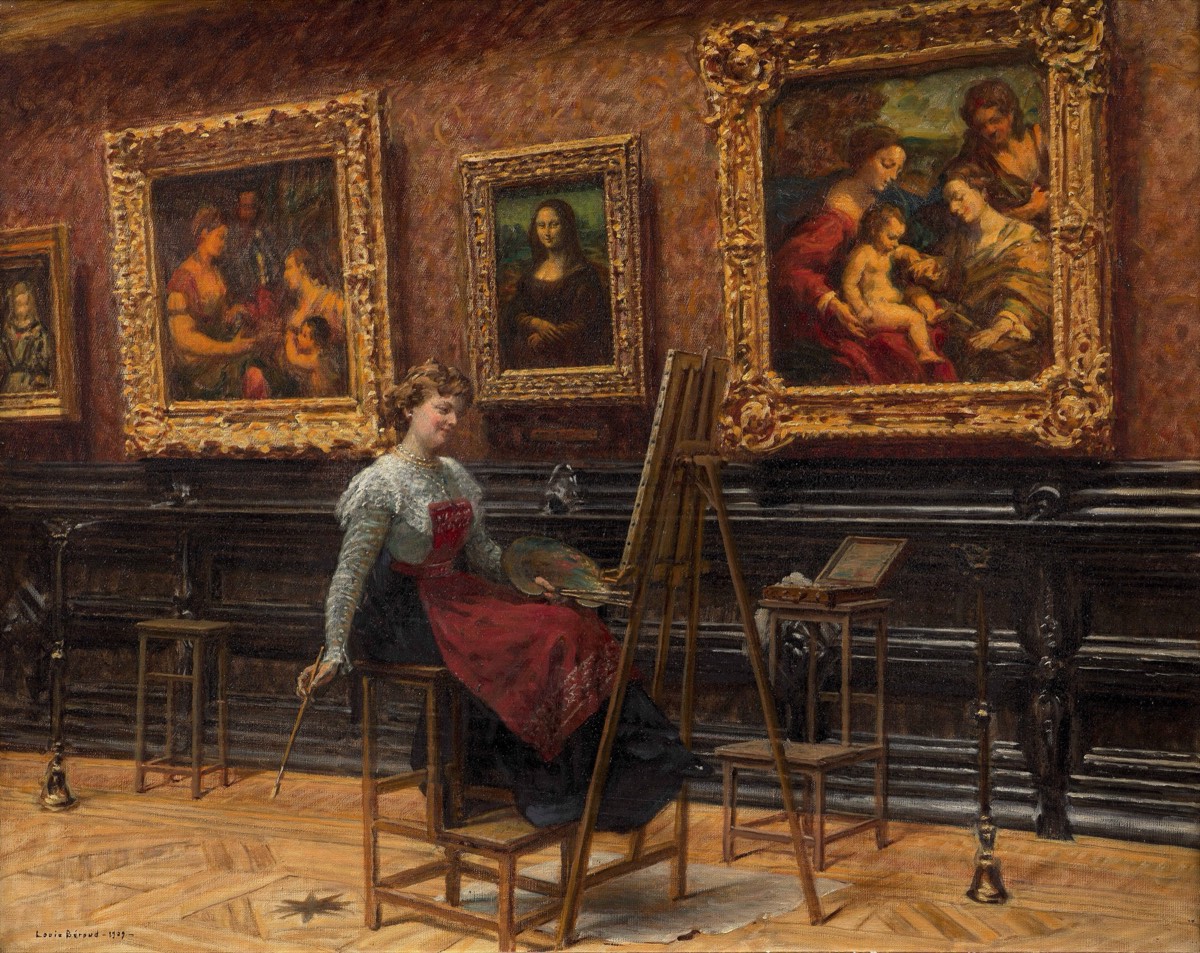
Béroud’s own painting of the room, 1909. She hung between two larger pictures.
Occam’s razor
Count the ifs.Start with the story that needs the fewest.
Occam’s razor is named after William of Ockham, a fourteenth-century English friar. The idea: when several explanations fit the evidence, prefer the one that makes the fewest assumptions. It doesn’t prove anything. It tells you which story to test first.
Simple has to fit
The guards’ story, that the photographers had her, was the simplest in the room until one question killed it. The razor only chooses among explanations that account for all the evidence.
In a post-mortem
When production breaks, the board fills up fast: a compiler bug, a cloud outage, an attacker, the new framework. Each one needs its own chain of ifs. Start with what changed and who had access: the deploy, the config flag, the job that ran on Monday. It is usually the dull one.
Write the ifs down. A theory that needs three coincidences is three bets, not one.
Watch for true clues from other cases. The statuette really was stolen. That is what made the poet look guilty.
Order matters. Throw out the plain explanation early and every theory left standing is a complicated one.
Make the evidence searchable. His print was in the files for two years, filed under the wrong hand. Logs you can’t query by the key you have are logs you don’t have.
What happened
By his own account, Vincenzo Peruggia walked into the Louvre on the morning of Monday, August 21, 1911, when it was closed to the public. He had worked there for a glazier, putting the most valuable paintings behind glass. He chatted with old workmates, lifted the Mona Lisa off her pegs, left the frame on a back staircase and walked out with the panel under his white smock.
He kept her in a trunk with a false bottom in his lodgings for more than two years. In December 1913 he offered her to a dealer in Florence and was arrested the same day. Apollinaire, jailed for five days in 1911, had nothing to do with it; the statuette thief, Géry Pieret, was a different case.
The board simplifies the investigation. The theories were all printed or pursued in 1911; the pins, their wording and the notes on the stage are ours. The Petit Parisien images are from gallica.bnf.fr / BnF.
Louis Béroud, La Copiste devant la Joconde, 1909. Two years later Béroud was the painter who asked where she had gone.Wikimedia Commons