After Emperor Huizong
The Best Kick in Kaifeng
ClerkClerk
0kicks
0 out of sight0 on the roof0 read
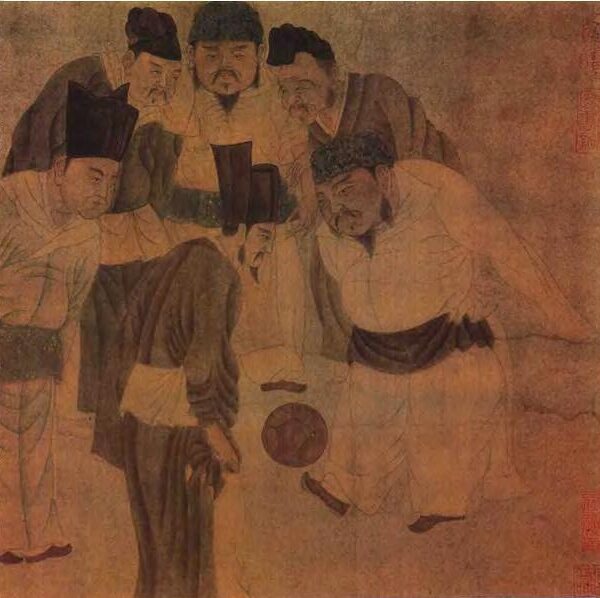
Kaifeng, capital of the Song empire, at the start of 1100. You’re Gao Qiu, a clerk with a neat hand and one real gift: nobody in the city keeps a ball in the air the way you do.
The Peter Principle
Promoted for the kick,then handed the army.
In a hierarchy every employee tends to rise to his level of incompetence.Laurence J. Peter and Raymond Hull, 1969
Laurence J. Peter taught school in Vancouver before he became a professor of education. By his own account he first explained the idea to the playwright Raymond Hull in December 1963, during the intermission of a badly presented play. Hull wrote it up for Esquire, where it ran in the January 1967 issue. Peter counted fourteen rejection notices before William Morrow published The Peter Principle in February 1969. The jacket added “Why Things Always Go Wrong.”
The argument takes three steps. People are promoted for doing their current job well. Each promotion is a different job. So the promotions stop at the first job a person can’t do, and that’s the one they keep. Peter’s corollary follows: “In time, every post tends to be occupied by an employee who is incompetent to carry out its duties.” So does his account of how anything gets done: “Work is accomplished by those employees who have not yet reached their level of incompetence.”
The kick: is it true?
The book is satire, but the best test of it so far came out in its favor. In 2019 Alan Benson, Danielle Li and Kelly Shue published a study of 38,843 salespeople at 131 firms, 1,553 of whom were made managers. Doubling a person’s sales raised their chance of promotion by about a third. Once they were managing, each doubling of their old sales went with a 6.1 percent drop in the sales of everyone under them. Experience of working on shared deals predicted good managers and had no steady effect on who was promoted. The authors don’t call the firms foolish. A promotion is also a prize, and the prize may sell enough to pay for the worse manager.
Edward Lazear showed in 2004 that some of this needs no bad judgment at all. “Being promoted is evidence that a standard has been met. Regression to the mean implies that future ability will be lower, on average.” Anyone picked for a great year will look worse the year after. In 2010 three researchers in Catania simulated a firm of 160 posts on six levels. Where skill carried over to the next job, promoting the best raised output by 9 percent. Where it didn’t, promoting the best cut output by 10 percent, and promoting at random came out slightly ahead either way. They won the Ig Nobel Prize in management. Everything depends on whether the next job uses the skill that earned it.
The premise is old. In the third century BC the state of Qin gave a soldier one step in rank for each enemy head, and an office to go with it. The philosopher Han Fei objected that you might as well make the men who take heads into physicians and carpenters: no houses would get built and nobody would be cured. An office takes wisdom, he wrote, and taking heads takes courage.
The fog: what happens next
Peter assumed people stay where they stall. In November 2026 mandy brown asked on A Working Library whether they do. Her note “Petered” draws on Christian Gläßel and Adam Scharpf’s Making a Career in Dictatorship, which follows the careers of all 14,700 officers of the Argentine army. Officers stuck in the hierarchy and facing forced retirement were the likeliest to join repressive units or coups. The authors call the motive career pressure. “By loyally executing the organization’s dirty work, they can reestablish their value, regain competitiveness, and even outpace peers who were previously ahead of them.”
She connects this to David Graeber’s Bullshit Jobs (2018). One of Graeber’s five kinds is the flunky, whose job exists “only or primarily to make someone else look or feel important. Another term for this category might be ‘feudal retainers.’” A person promoted past their ability, she writes, “has in effect been made an imposter,” a real one, who must seem to belong in a job they can’t deliver. “Imposters cloak themselves in a fog of obfuscation and busyness, so that the people around them can never say for sure what it is they are doing, or how well (or not) they are doing it.”
Graeber’s wider claim is contested. A 2015 YouGov poll found 37 percent of British workers saying their job made no meaningful contribution to the world. But when Magdalena Soffia, Alex Wood and Brendan Burchell checked European survey data in 2021, only 4.8 percent of workers said they lacked the feeling of doing useful work, down from 7.8 percent ten years earlier. They did find that people who feel useless are much worse off. The retainer needs no survey. Gao Qiu was one.
The emperor: who promoted him?
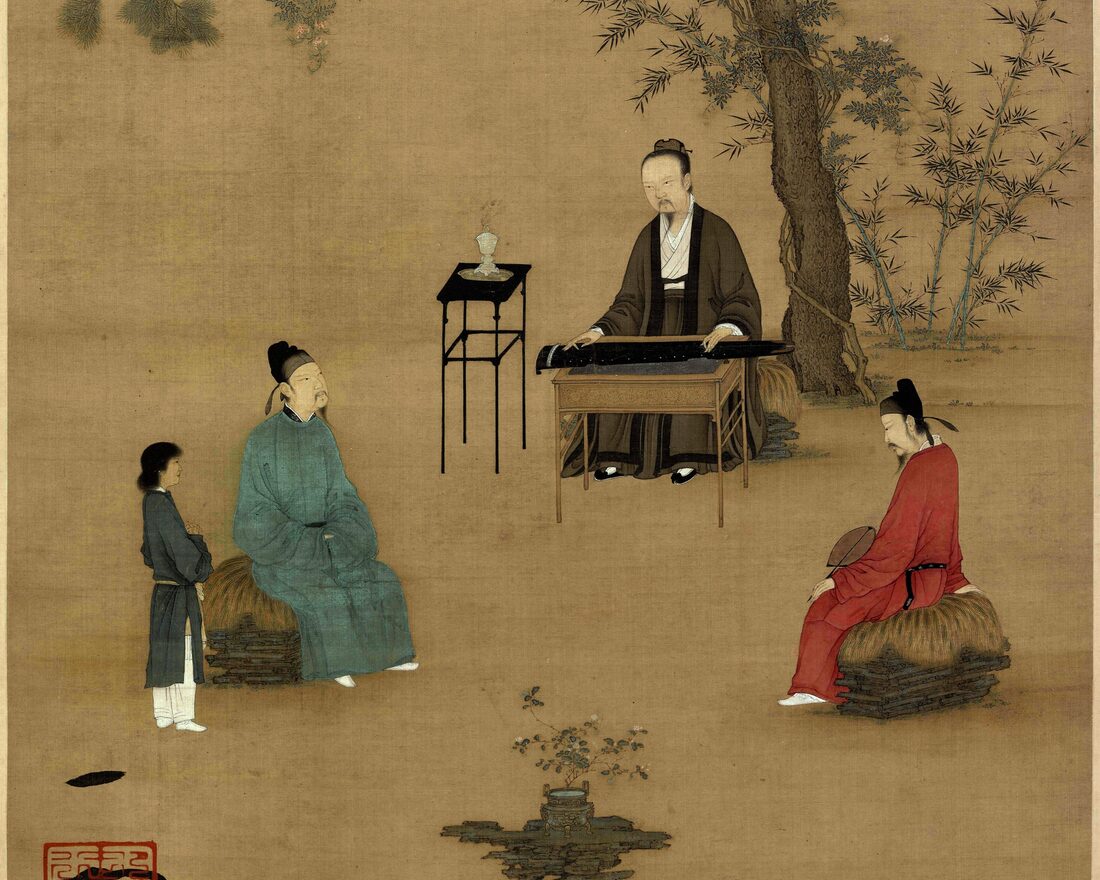
Zhao Ji, the Prince of Duan, took the throne on February 23, 1100, when his brother died without a son. History knows him as Huizong. He collected thousands of paintings, ran a painting academy, and invented the wiry script called Slender Gold. He also kept his friends. Cai Jing was a fine calligrapher who got back to court in 1102 through a eunuch sent south to buy paintings, and he served as chief councilor four times. That eunuch, Tong Guan, went on to command armies for twenty years and lost at Baigou in 1122. Zhu Mian shipped rare rocks and plants to the palace gardens in convoys so heavy-handed that the southeast rose in revolt in 1120.
In January 1126 the Jin army invaded. Huizong abdicated and fled. That June a memorial listed what Gao Qiu had done with the capital’s troops: barracks taken to enlarge his own mansion, guardsmen kept as his laborers, drill excused for any soldier who paid, and then no drill at all. In the emergency, it said, not one was usable. Kaifeng fell on January 9, 1127. Huizong was marched north and died a captive on June 4, 1135. Two centuries later the Mongol emperor Shundi praised one of his paintings, and the court calligrapher Kuikui answered that Huizong could do many things and only one he couldn’t. “What one thing?” “He could not be a ruler.”
The story should be held loosely. The kickball errand comes from a single writer, Wang Mingqing, decades later, and he gives it as something he was told. The court annals confirm only the favor and the career, and the official History of Song has no biography of Gao Qiu at all. The novel Water Margin made him its villain and added most of what people remember. Patricia Ebrey’s 2014 biography argues that Huizong was a more serious ruler than his reputation, and that much of what brought him down was beyond his control. Even the old historians didn’t call him a fool. He lost his state, they wrote, by trusting his own cleverness and keeping flatterers close.
What to do about it
- Promote for the next job. Look for signs of the skill the new post needs. In the sales study that was a record of sharing credit, and firms mostly ignored it.
- Pay the kick as a kick. Herbert Shepard described a second ladder for specialists in 1958, and IBM has named Fellows since 1963. It has to be worth as much as managing. In a 1986 survey of nearly 1,500 engineers, about a fifth preferred the technical ladder, which can read as a consolation prize.
- Let people try the job, and go back. An acting role with a way home costs little. Hard evidence on trial promotions is thin, so treat this as Peter’s logic and not as a finding.
- Read the reports. When nobody can say what a manager does all day, the busyness may be the job. Ask what changed because of it.
- Look up as well. Gao Qiu didn’t appoint himself. Whoever keeps promoting the people they enjoy is having the same problem one level higher.
About the pictures
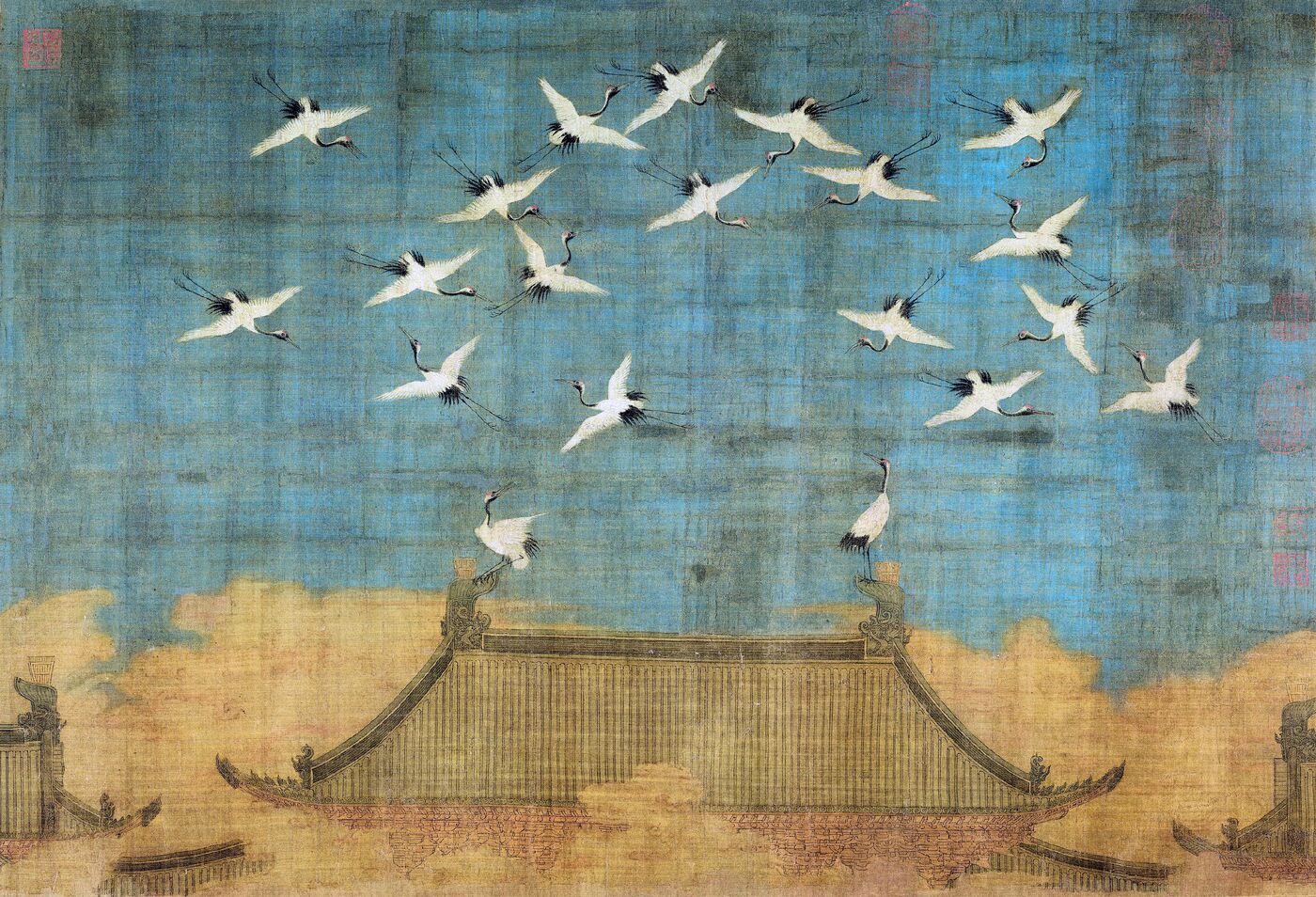
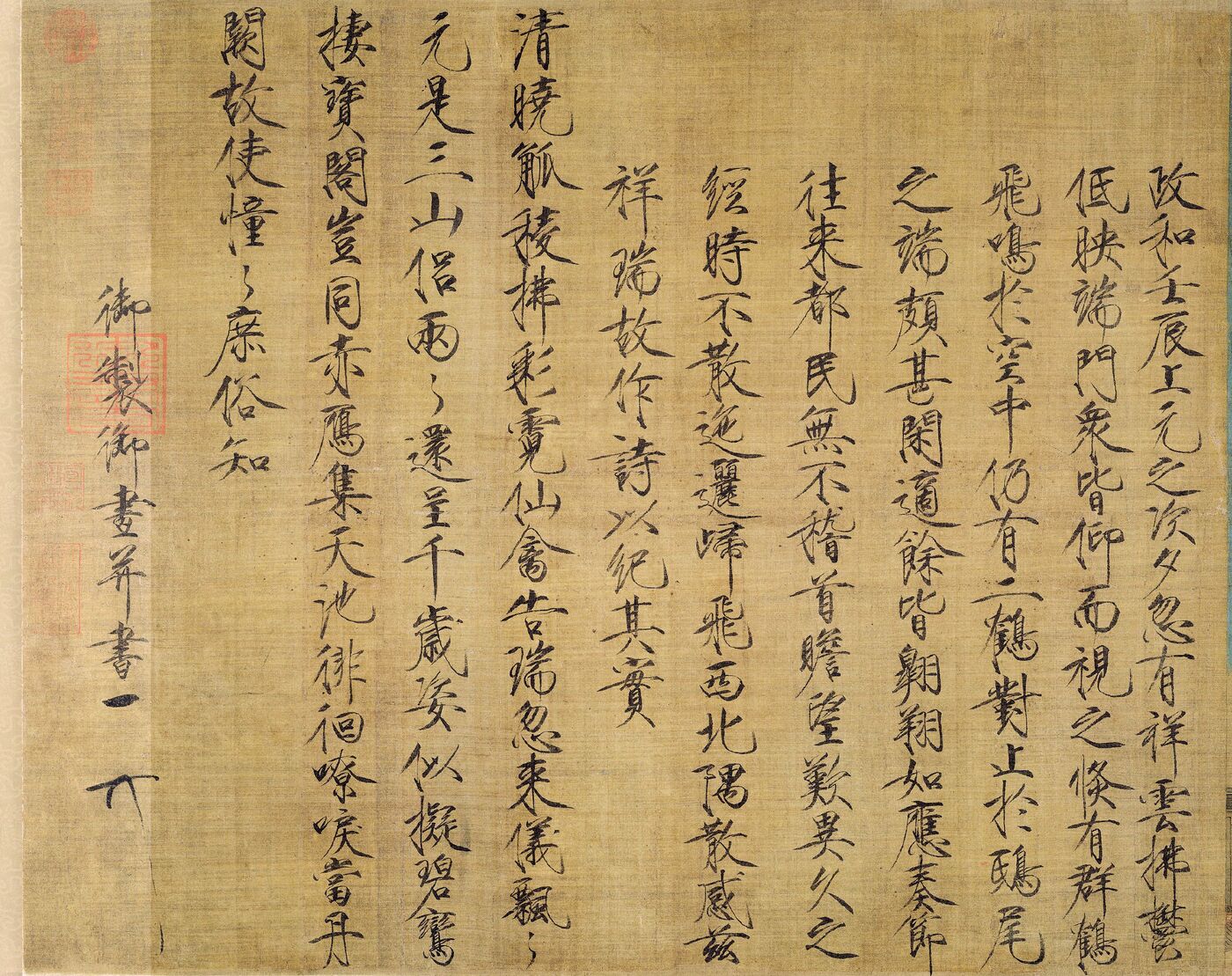
The stage is Auspicious Cranes, ink and color on silk, 51 by 138 centimeters, in the Liaoning Provincial Museum in Shenyang. Huizong’s inscription says that on the evening after the Lantern Festival of 1112, clouds gathered low over the main gate of the palace, a flock of cranes flew calling through the sky, and two came to rest on the ornaments at the ends of the roof ridge. He signed it “composed, painted and written by the emperor,” with a cipher read as “first man under heaven.” Scholars still argue over whether “painted” means his own brush or his academy’s.
We lifted the eighteen flying cranes off the silk so they could move, and filled in the sky behind them. The two on the roof stay where he put them. The color is matched to a brighter reproduction of the same scroll. The mark that appears at each promotion is his cipher, taken from this inscription. The ball, the reports and the weather are ours. The first five reports are invented, and the next five paraphrase the 1126 memorial and the History of Song. The prince’s words to Gao Qiu are Wang Mingqing’s, and the translations from Chinese are ours.
Sources
The Peter Principle, 1969Esquire, January 1967Benson, Li and Shue, 2019Lazear, 2004The Peter Principle Revisited, 2010Han Feizi, chapter 43mandy brown, “Petered”Bullshit Jobs at A Working LibraryMaking a Career in DictatorshipSoffia, Wood and Burchell, 2021Wang Mingqing on Gao QiuThe 1126 memorialKuikui in the History of YuanHistory of Song on HuizongEbrey, Emperor HuizongAllen and Katz on dual ladders