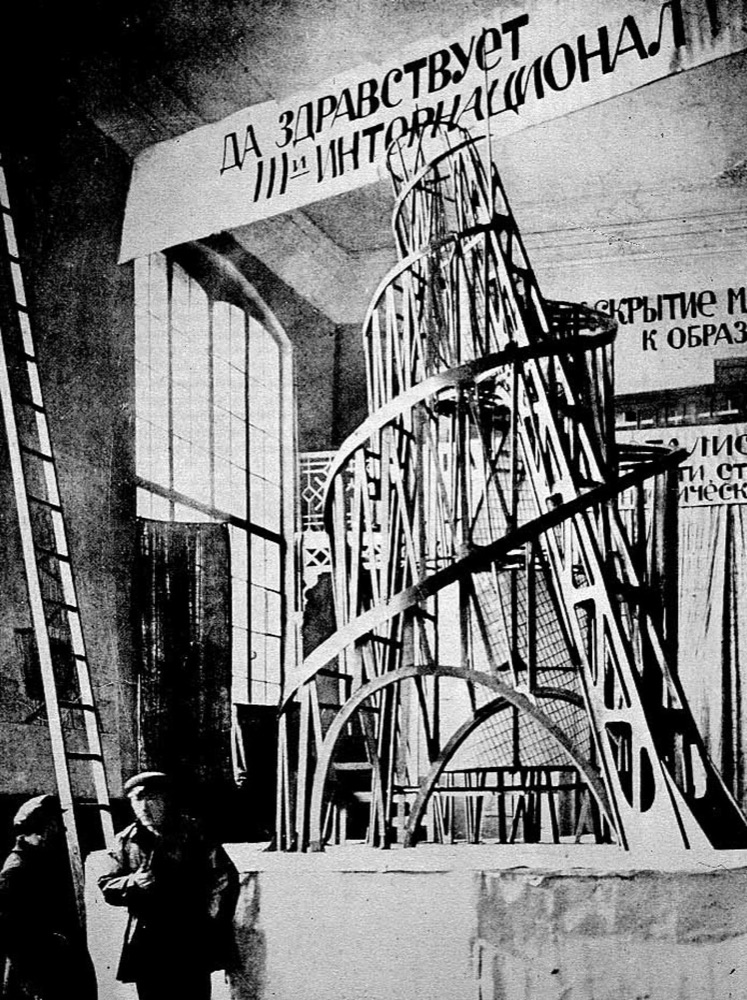
After Vladimir Tatlin, 1919
You aren’t gonnaneed it
You aren’t gonna need it
Build what you need.Leave room to change.
YAGNI means “You aren’t gonna need it.” The idea, from Extreme Programming: build for a real need, rather than a future you can only guess at.
The price of “just in case”
A feature costs more than the time it takes to write. Martin Fowler identifies four costs:
- Build
- The effort spent making something you may never use.
- Delay
- The useful work that waits while you build it.
- Carry
- The extra complexity that slows down later changes.
- Repair
- The rework when the real need differs from your guess.
In this experiment, each machine is a bet on a future request. It moves the opening date and can add upkeep to later work. Even the gift cards, which arrive exactly as predicted, cost time while they wait to be useful.
Keep change affordable
Refactoring, tests and clear code make it easier to add a feature when it matters. That work supports YAGNI. In the tower, the single price table is a brace: a small improvement that makes each price change easier.
Why Tatlin’s tower?
Designed in 1919–20, Vladimir Tatlin’s Monument to the Third International imagined a 400-meter tower with rotating halls, offices and a news center. Only models were built. Here, its ambitious machinery becomes a way to see the weight of each “just in case.”
The booking app, requests and day counts are invented. Building ahead can pay off; this experiment asks you to count the full cost.